

If you are a purchasing manager or an electrical engineer at a vehicle conversion company, you have likely faced this exact frustration: You order an aftermarket LVDS camera designed to integrate with the original dashboard screen, but when the package arrives on the production line, the connectors won't plug in because both sides have male pins.
In high-speed digital automotive wiring (such as FAKRA HSD 4-Pin connectors), determining whether you need a Male or Female connector can be surprisingly tricky. Let’s break down the two main installation scenarios used by European converters to ensure you never order the wrong harness configuration again.
Before look at the wiring routes, we must address the biggest source of confusion in automotive electronics:
Male (Plug): Refers to the connector containing the metal pins. However, its outer plastic protective shell is often a recessed socket.
Female (Jack): Refers to the connector containing the metal holes. However, its outer plastic shell is often a protruding plug.
Many workshop technicians look only at the plastic outer shell, call it a "Male," and order a "Female" camera, only to find that the internal metal pins collide during installation.
In this workflow, the technician leaves the original factory cable inside the vehicle chassis, running from the dashboard all the way to the rear.
The Original Setup: The original factory camera has a short tail cable (Male Pin) plugged into the vehicle's main harness terminal (Female Jack) located near the rear license plate or upper doors.
The Aftermarket Requirement: When you remove the factory camera, the original female harness remains exposed at the rear of the vehicle. Therefore, your new aftermarket LVDS camera must be equipped with a Male (Plug) Connector to plug directly into that existing factory line.
Because standard factory cables are usually too short for extended luxury motorhomes, premium coachbuilders prefer to bypass the factory wiring completely to prevent signal loss from manual wire splicing.
The Connection Route:
The technician unplugged the factory harness straight from the back of the original infotainment screen. The port on the back of the OEM head unit is almost always a Male (Pin) interface.
To connect to this screen, the front end of your 10-meter or 15-meter aftermarket extension cable must be a Female (Jack) Connector.
This long cable is routed through the floor or ceiling to the rear wall.
At the rear wall, the back end of the extension cable connects to the short tail of the new camera. For easy servicing later, this rear connection usually requires another Male-to-Female mating pair.
To ensure a 100% error-free production run, always clarify these two questions with your engineering team and your manufacturing partner before placing a B2B order:
Where is the physical break-point? Are you plugging into the vehicle at the dashboard radio unit, or at the pre-existing harness at the rear wheel/door arch?
Request a Pin-View Photo: The safest engineering practice is to take a clear, top-down photo looking directly inside the target vehicle connector. If you see open holes, you need a male pin camera. If you see exposed pins, you need a female jack c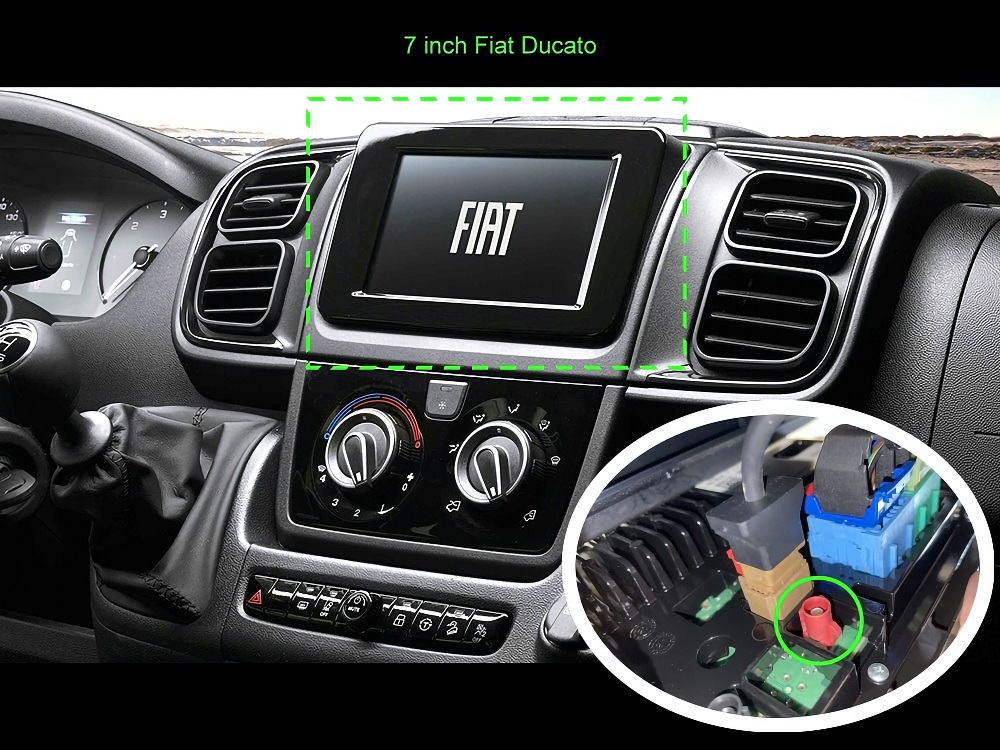
Because different conversion workshops and vehicle model years utilize different wiring strategies, we recommend a fail-safe option: Request custom 20cm Male-to-Female adaptors included in your batch shipment. This gives your workshop team on-the-spot flexibility, completely eliminating downtime caused by harness incompatibility.
Don't risk ordering the wrong batch. At Standtop, we custom-engineer Plug-and-Play LVDS Cameras supporting both Male and Female FAKRA HSD configurations for Fiat Ducato 8, Fiat 500e, Jeep Compass, and Alfa Romeo Tonale.
Zero Signal Loss: Supplied with 10m/15m heavy-shielded extension cables for long motorhome bodies.
Fail-Safe Solution: We can include 20cm Male-to-Female converter adaptors upon request.
[Click Here to View Our Dedicated Stellantis LVDS Camera Product Page] or directly Send an Inquiry with your connector photo, and our R&D team will verify the exact pinout for you within 24 hours!
Address:Rm 212, Zhongzheng Sci-Tech Innovation Park, No. 90-2 Xintang Road,Fuhai, Baoan District,Shenzhen,518103,China
© 2010-2026 All Rights Reserved




 Wechat

 WhatsApp

 Email
Email

 +86-755-27322079